
Pet X-Rays in Oakland, TN
Digital X-rays give our team a clear view of your pet’s bones, joints, chest, and abdomen—without surgery or waiting. At Main Street Animal Clinic, our on-site imaging equipment means we can take and review X-rays during your pet’s visit and discuss findings.
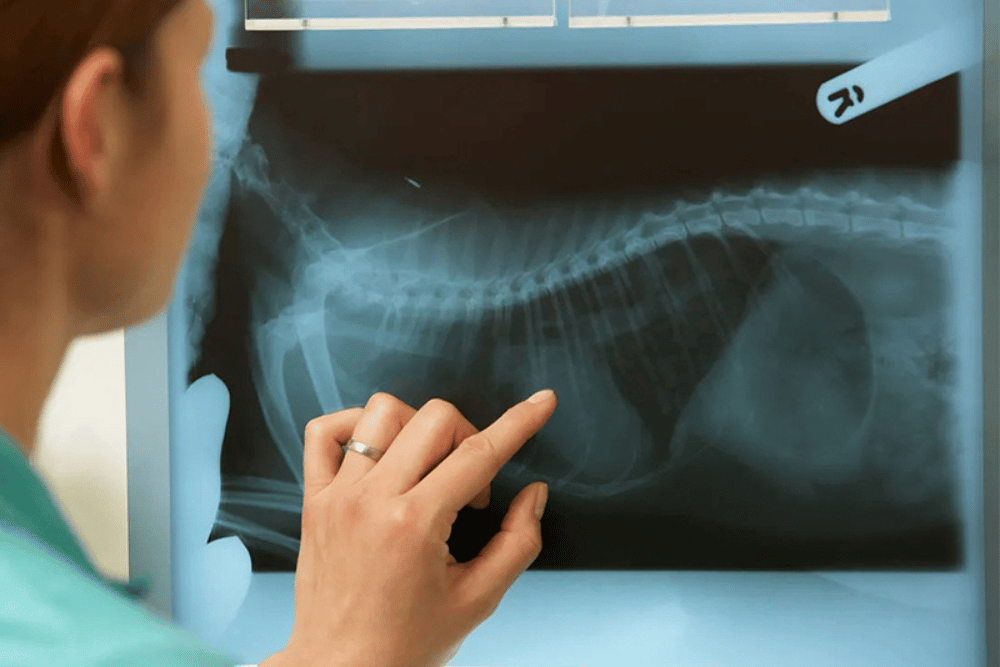
What Pet X-Rays Can Show Us
X-rays are most useful for evaluating structures that show up well under radiation—primarily bone and air-filled spaces. They give us a reliable picture of:
Bones and joints
Fractures, dislocations, bone density changes, and early signs of arthritis are all visible on X-ray. For pets with limping, stiffness, or a history of trauma, radiographs are often the first imaging step, especially ahead of orthopedic surgery.
Chest and lungs
X-rays let us assess heart size and shape, identify fluid in or around the lungs, and screen for masses or changes in lung tissue. They’re commonly used when a pet is coughing, breathing with difficulty, or has a heart murmur detected during a physical exam.
Abdominal X-rays can reveal organ enlargement, abnormal positioning, gas patterns that suggest obstruction, intestinal blockage/barium studies, bladder stones, and foreign objects that have been swallowed. If your pet has vomiting, straining, a distended belly, or sudden behavioral changes, an abdominal X-ray can help us rule in or out several common causes quickly.
Abdominal X-rays can also help count how many puppies a female dog is pregnant with.
Spine
Spinal X-rays can help evaluate disc disease, vertebral abnormalities, and alignment issues—particularly useful in dogs showing signs of back pain, weakness in the hindlimbs, or difficulty walking.
Digital Radiography at Main Street Animal Clinic
We use digital radiography rather than traditional film X-rays. Digital imaging produces clearer images with less radiation exposure, and results are available immediately rather than requiring a development process. Images can also be stored electronically and shared with specialists or emergency facilities if a referral is needed.
For cases requiring more detailed soft tissue imaging—such as evaluating internal organs, pregnancy, or cardiac structure—we offer ultrasound as a complementary tool. Learn more on our Pet Ultrasound page
Does My Pet Need Sedation for X-Rays?
Many X-rays can be taken with your pet awake, particularly when they are cooperative, and the area being imaged is easy to position. In some cases—such as when a pet is in pain, anxious, or when precise positioning is critical for an accurate image—light sedation may be recommended.
We’ll assess your pet’s comfort level and let you know what to expect before we proceed.
When Pet X-Rays Are Commonly Recommended
X-rays are used in a wide range of situations at our clinic. Common reasons we reach for imaging include:
- Limping, lameness, or suspected fracture following trauma
- Coughing, labored breathing, or a newly detected heart murmur
- Vomiting, suspected foreign body ingestion, or abdominal distension
- Back pain, weakness, or neurological symptoms
- Pre-surgical planning for orthopedic or soft tissue procedures
- Monitoring a known condition, such as arthritis, heart disease, pregnancy puppy count, intestinal
- blockage/barium studies, or bladder stones
- Screening senior pets for age-related changes in chest or abdominal organs
Pet X-Ray FAQs
Are X-rays safe for my pet?
How long does an X-ray appointment take?
Can X-rays detect cancer in pets?
What's the difference between X-rays and ultrasound?
My pet swallowed something—do they need an X-ray?
Schedule Pet X-Rays in Oakland, TN
Our clinic is located at 7980 Hwy 64 in Oakland, TN, and we welcome pets from across Fayette, Shelby, Hardeman and Tipton counties, as well as some areas of Mississippi. If your pet needs imaging or you have concerns that warrant a closer look, call us at (901) 235-7127 or book online to schedule a visit.